 跳转到主要内容 跳转到页脚
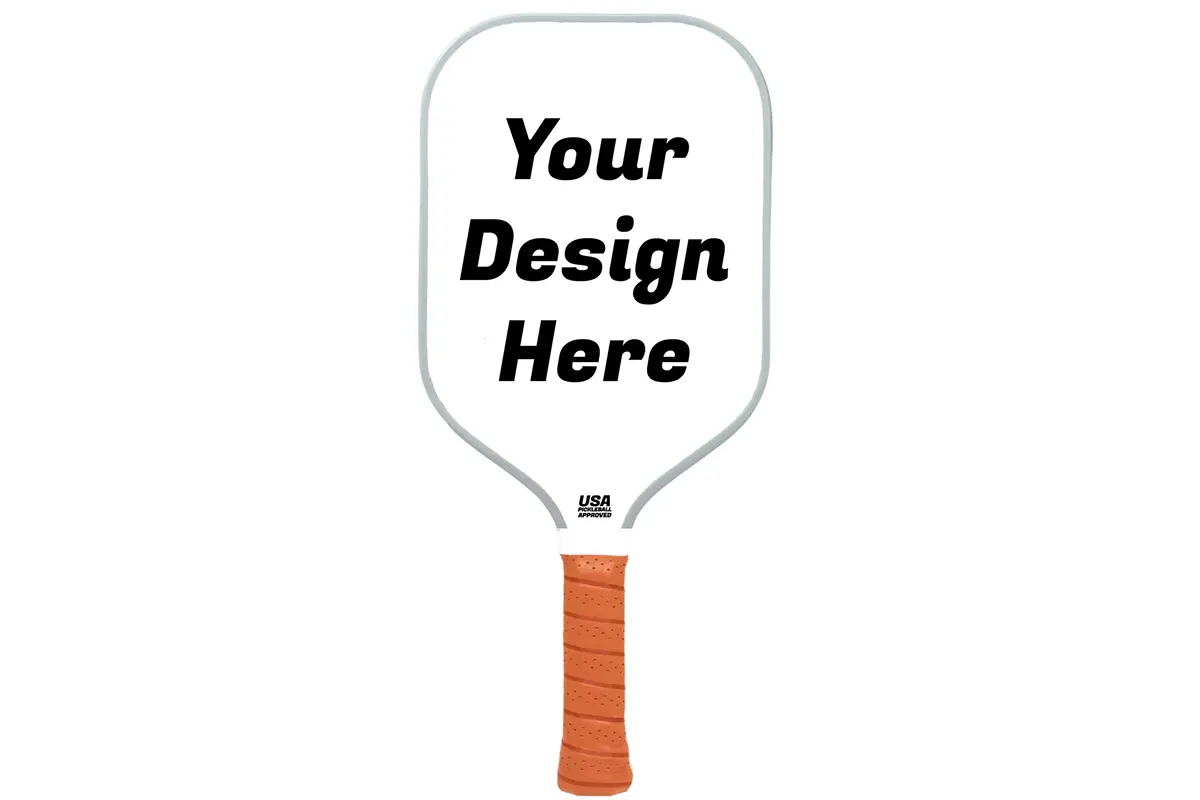
Most manufacturers won’t tell you what custom pickleball paddles actually cost. That silence wastes everyone’s time. Here are the real numbers.
Custom pickleball paddles cost between $11 and $50per piece at the factory level, depending on the materials and construction method. Entry-level fiberglass paddles start around $11–19/pc. Intermediate carbon fiber paddles run $19–27/pc. Professional thermoformed paddles go from $27–50/pc. All prices include full custom graphics. custom edge guard, and custom grip will charge a logo mold cost.
I’ve worked in this factory long enough to know that vague pricing frustrates buyers. You ask for a quote, you get "it depends." That’s not helpful. So I’ll break down exactly what drives the price, what’s included, and what to expect when you place your first order.
All custom pickleball paddles have the same manufacturing cost regardless of material.假的
Material choice is the single biggest cost driver. Thermoformed 3K carbon fiber paddles cost roughly twice as much to produce as entry-level fiberglass paddles due to raw material cost and longer production time.
Custom graphics are typically included in the unit price at most factories.正确
At DinkPickleball, the quoted unit price always includes full custom printing on both paddle faces, edge guard color, grip ring color, and grip selection. There are no hidden graphic fees.
What factors affect custom pickleball paddle pricing?
The price you pay per paddle isn’t random. Four things drive it: materials, construction method, order quantity, and what’s included in the price.
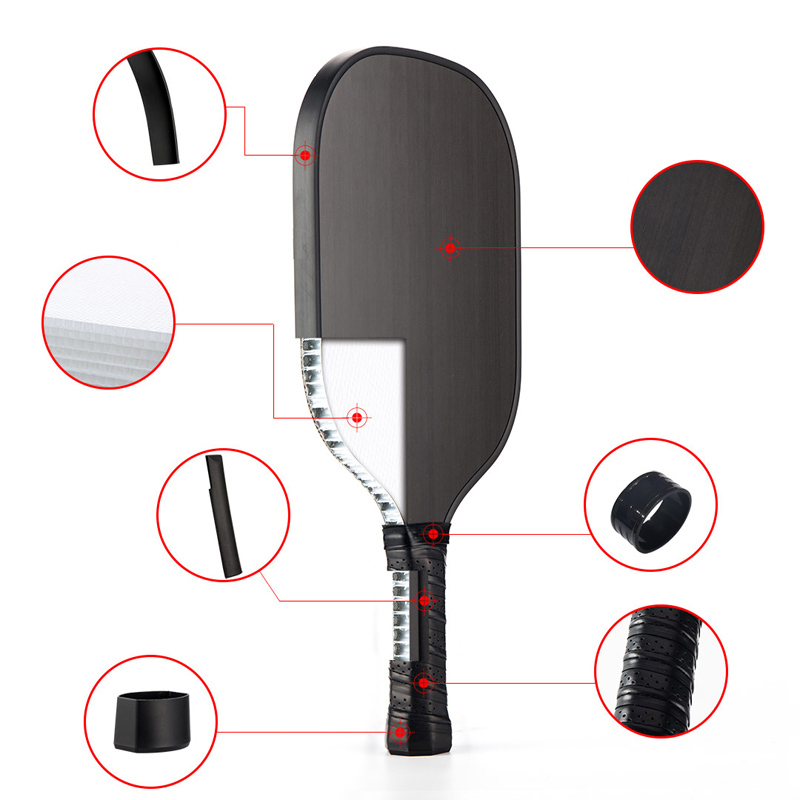
The biggest factor is materials. A fiberglass1 face with a basic PP honeycomb core2 costs far less to produce than a raw carbon fiber face built on a high-density PP core. The difference isn’t just the material cost — it’s also the production time. Thermoformed paddles require a longer pressing cycle, more manual quality checks, and more scrap loss during production.
The Four Cost Drivers Explained
| 系数 | Impact on Price | Notes |
|---|---|---|
| Face material | 高 | Fiberglass < Raw carbon < Thermoformed carbon |
| Core density | 中型 | Higher density = heavier, firmer, pricier |
| Order quantity | 高 | 100 pcs vs 1000 pcs can differ by $3–5/pc |
| Customization depth | 低 | Basic 2-color vs. full graphic print |
Construction method matters a lot at the top tier. 热成型桨3 use heat and pressure to fuse the carbon fiber layers directly to the core. This creates a one-piece structure with better pop and a livelier feel. It also adds time and cost. Cold-pressed paddles glue the face to the core, which is faster and cheaper, but the feel and durability are different.
One thing buyers often overlook: what’s actually included in the quoted price. At our factory, the unit price covers the paddle face, core, edge guard, grip ring, custom graphics on both sides, and the handle grip. There are no hidden fees for "adding your logo." That’s part of the deal.
Thermoformed pickleball paddles cost more to produce than cold-pressed paddles.正确
Thermoforming requires pressing the carbon fiber and core together under heat at controlled pressures for a longer cycle. The process results in better delamination resistance and feel, but adds production time and cost compared to standard cold-press assembly.
Edge guard and grip customization are always priced separately.假的
At DinkPickleball, edge guard color, grip ring color, and grip type are all included in the standard unit price. No extra charge for matching these to your brand colors.
How does minimum order quantity (MOQ) impact the price per paddle?
Our MOQ is 100 pieces per design. That means 100 paddles with the same graphics, same materials, and same specs count as one design. At 100 pieces, you get one complete color set — one edge guard color, one grip ring color, one grip color.
The reason for this minimum isn’t arbitrary. It’s about setup costs. Every new design requires a film print, a production setup, and a QC run. Spreading those fixed costs over 100 units is the minimum that makes the economics work for both sides.
How Quantity Tiers Affect Your Unit Price
Here’s a real-world example using T700 carbon fiber4 intermediate paddles:
| Quantity | Est. Unit Price | What You Unlock |
|---|---|---|
| 100 pcs | ~$27/pc | 1 color combo (edge guard + grip ring + grip) |
| 400 pcs | ~$24/pc | 2–3 color combos |
| 1000 pcs | ~$19/pc | Full color range, priority scheduling |
Higher quantities unlock two things: lower price per unit and more color flexibility. At 400+ pcs, we can offer you two or three color variants for the same design — useful if you’re building a product line with a light and dark version of the same paddle.
This is the answer to the most common question I hear: "Can I get a lower price if I order more?" Yes. Always. The more units you commit to, the lower the unit price. This is true for all three paddle tiers. The price drops are most noticeable going from 100 to 400 pcs. Going from 400 to 1000 pcs gives a smaller additional drop, but it adds scheduling advantages — your order gets prioritized in the production queue.
One more thing: if you want to split a 400-piece order across two designs (200 each), the per-unit price for each design still reflects the 200-piece tier, not 400. Quantity breaks are counted per design, not per overall order. Keep this in mind when planning your SKU strategy.
Higher order quantities always result in a lower unit price for custom pickleball paddles.正确
All factories work on tiered pricing. Fixed costs like film setup, production scheduling, and QC are spread across more units at higher quantities, which reduces the cost per piece. At DinkPickleball, price drops are most significant between 100 and 400 pcs.
You can mix multiple designs and still get the bulk pricing discount for the entire order.假的
Price tiers are calculated per design, not per total order quantity. If you order 200 pcs of Design A and 200 pcs of Design B, each design is priced at the 200-piece rate, not the 400-piece rate.
What is the price difference between entry-level, intermediate, and pro paddles?
Let me put the numbers on the table directly. These are our factory prices for a standard 100-piece order with full custom graphics:
| Paddle Tier | 面材 | 核心 | Price Range (100 pcs) |
|---|---|---|---|
| Entry | 玻璃纤维/复合材料 | PP Honeycomb | $11–19/pc |
| 中级 | T700 Raw Carbon Fiber | PP Honeycomb | $19–27/pc |
| Professional | Thermoformed 3K Carbon Fiber | PP Honeycomb | $27–50/pc |
The $11–19 entry paddle uses a fiberglass or composite face bonded to a standard PP honeycomb core. It’s a solid paddle for recreational play, affordable for brands that want to offer a budget option or starter set. The feel is softer, which some players actually prefer for control.
What You’re Actually Paying For
The $16–39 gap between entry and professional isn’t just branding. Here’s what changes:
Face material: Fiberglass is woven glass fiber. T700 carbon is a raw carbon weave. 3K thermoformed carbon is a tighter, stiffer weave pressed under heat — it produces a harder, livelier surface with better energy transfer on contact.
Production complexity: A thermoformed paddle requires two pressing cycles and more precise temperature control. There’s more skilled labor involved. Scrap rates are higher because a single defect in the pressing phase ruins the paddle.
Performance ceiling: Entry paddles are fine for beginners and casual players. Competitive players and serious club players will notice a real difference with intermediate and pro paddles — faster response, cleaner ball contact, better pop from the sweet spot.
For most brand owners entering the market, I recommend starting with intermediate paddles. The $19–27 range gives you a competitive product that appeals to intermediate and advanced players — which is the fastest-growing segment of the market5 — without the premium cost of thermoformed.
Thermoformed carbon fiber paddles always outperform cold-pressed paddles for all playing styles.假的
Thermoformed paddles offer more pop and a livelier feel, which suits power players. But control-focused players sometimes prefer the softer response of cold-pressed or fiberglass paddles. The best choice depends on the target player profile.
The unit price includes custom graphics on both sides of the paddle at DinkPickleball.正确
Our quoted price always includes full custom printing on the front and back face, plus edge guard color, grip ring color, and grip selection. There is no separate design fee for standard 2-sided graphic printing.
Are samples free when ordering custom pickleball paddles?
No, samples are not free. I’ll explain why — and why that’s actually fair.
Our sample price is $50 per paddle, flat rate. Shipping is separate and typically runs $60–80 for 3–5 paddles sent by express courier (DHL, FedEx, or UPS). So if you order 3 samples, expect to spend around $150–230 total before samples arrive at your door.
Why Samples Aren’t Free
Custom samples require real production time. Your graphics have to be printed. The paddle has to be assembled, edge guard fitted, and grip wrapped. It goes through the same QC process as a production run. The only difference is the quantity — one or two paddles instead of hundreds.
At $50/pc, we’re not making money on samples. We’re covering costs. And the sample price is credited toward your first production order in most cases — ask us to confirm this when you place your sample request.
What to Order and Why
| Sample Scenario | Recommendation | Expected Cost |
|---|---|---|
| First-time buyer, 1 material tier | 3 paddles | ~$150 + $70 shipping |
| Comparing 2 tiers (e.g., entry vs. intermediate) | 2 of each | ~$200 + $75 shipping |
| Final pre-production confirmation | 2 paddles | ~$100 + $65 shipping |
One practical tip: order at least 2 samples per design. One to keep, one to give to a player for a real-on-court test. If the sample plays well, you have a backup in case something gets damaged during testing. If it doesn’t play well, you have two data points to discuss with us.
The $60–80 shipping cost is for express, door-to-door delivery with tracking. We can also use standard air freight, which is slower (10–15 days) but around 30–40% cheaper. For time-sensitive buyers comparing manufacturers, express is usually worth it.
Sample costs are typically credited toward the first production order at most paddle factories.正确
Many manufacturers, including DinkPickleball, will apply the sample cost as a credit toward your production order. Confirm this in writing before placing your sample order. The credit terms vary by factory.
You need to order samples before placing a bulk production order.假的
Samples are strongly recommended, but not required. Some repeat buyers who have worked with us before will place production orders without a new sample if the spec hasn't changed. First-time buyers should always order samples.
Should you choose DDP or EXW pricing for your paddle order?
Both are standard trade terms. Understanding the difference will directly affect how you budget and manage your order.
EXW (Ex Works)6 means the price covers the paddle at our factory gate. You arrange and pay for all shipping, customs clearance, import duties, and last-mile delivery yourself. The unit price is lower, but you take on all the logistics responsibility.
DDP (Delivered Duty Paid) means we handle everything — factory to your warehouse door. Shipping, customs, duties, and delivery are all included in the price. You get one all-in number. No surprises.

Which Pricing Term Is Right for You?
| Your Situation | Recommended Term | 为什么 |
|---|---|---|
| First-time importer, US/CA/AU | DDP | Simpler, no customs headaches |
| Experienced importer with freight forwarder | EXW | More control, lower unit cost |
| Small orders (100–200 pcs) | DDP | Freight forwarder fees eat EXW savings |
| Large orders (500+ pcs) | EXW | Freight forwarder can negotiate better rates |
| Fast turnaround needed | DDP | One point of contact, faster coordination |
The main advantage of EXW is cost control for experienced buyers. If you have a freight forwarder you trust, they can often get better shipping rates than what we build into DDP pricing. But there’s a catch: you need to know what you’re doing. Customs clearance in the US, for example, requires a customs broker7 and proper HS code classification. Get it wrong and your shipment sits in a warehouse waiting for paperwork.
For most first-time buyers and brands in the early stages, I recommend DDP. The all-in price is easy to budget. You don’t need to coordinate with a freight forwarder. You don’t get surprised by a customs bill you weren’t expecting. The unit cost is a bit higher, but the simplicity is worth it.
One more thing: DDP pricing locks in your total landed cost at time of order. If freight rates spike between your order date and ship date — which has happened a lot over the past few years — that’s our problem, not yours. With EXW, market rate changes at the time of shipment are your problem.
DDP pricing is always more expensive than EXW when all costs are added up.假的
For small orders, DDP can actually be cheaper in total because factories negotiate bulk shipping rates and split costs across multiple customers. For large orders, an experienced importer using their own freight forwarder can often beat DDP pricing. It depends on order size and buyer experience.
EXW price does not include any shipping, insurance, or customs duties.正确
EXW (Ex Works) is the most basic trade term. The seller's responsibility ends at the factory gate. All freight, insurance, export documentation, customs clearance, import duties, and final delivery are the buyer's responsibility and cost.
结论
Custom pickleball paddle pricing is clear once you know the materials, quantities, and trade terms involved. Real numbers, no guessing — that’s how we work.
参考资料
-
Carbon fiber vs. fiberglass paddle comparison — performance, feel, and material differences explained for pickleball players and brand owners. ↩
-
Why PP honeycomb core is the most common and reliable core choice for custom pickleball paddles; comparison with Nomex and EVA alternatives. ↩
-
Detailed explanation of thermoformed pickleball paddle construction — what thermoforming is and how it differs from standard cold-press manufacturing. ↩
-
T300 vs T700 carbon fiber in pickleball paddles — grade differences, tensile strength, and real-world performance implications. ↩
-
Global pickleball market size projected to grow from $1.5 billion in 2023 to $4.4 billion by 2033 — market context for brand owners evaluating market entry. ↩
-
EXW vs DDP Incoterms comparison — who pays, who ships, and which term is best for importing custom goods from overseas manufacturers. ↩
-
DDP vs EXW in-depth cost and responsibility breakdown — practical guide for importers choosing between factory-gate and door-to-door pricing. ↩

 简体中文
简体中文  English
  Español
  Français
  العربية
  Português
  Deutsch